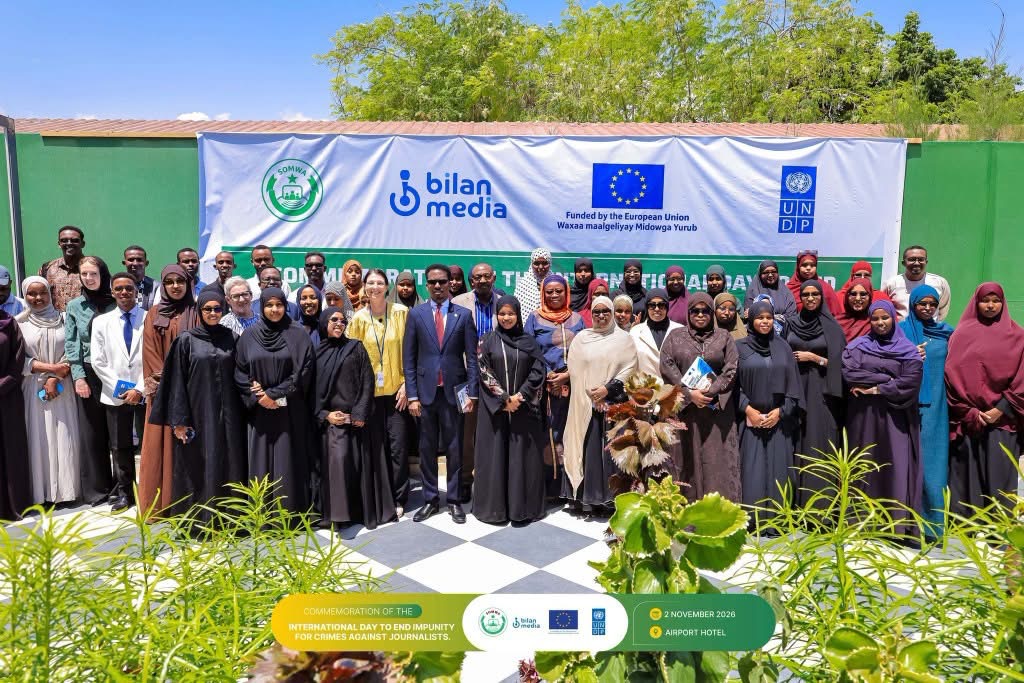
MOGADISHU, Somalia – Somali women journalists continue to face widespread threats, harassment, arrests, and gender-based violence, prompting renewed calls for justice, accountability, and stronger protection for media workers.
The concerns were raised during an event marking the International Day to End Impunity for Crimes Against Journalists (IDEI), where the Somalia Media Women Association (SOMWA) launched a report highlighting the challenges confronting women journalists across Somalia.
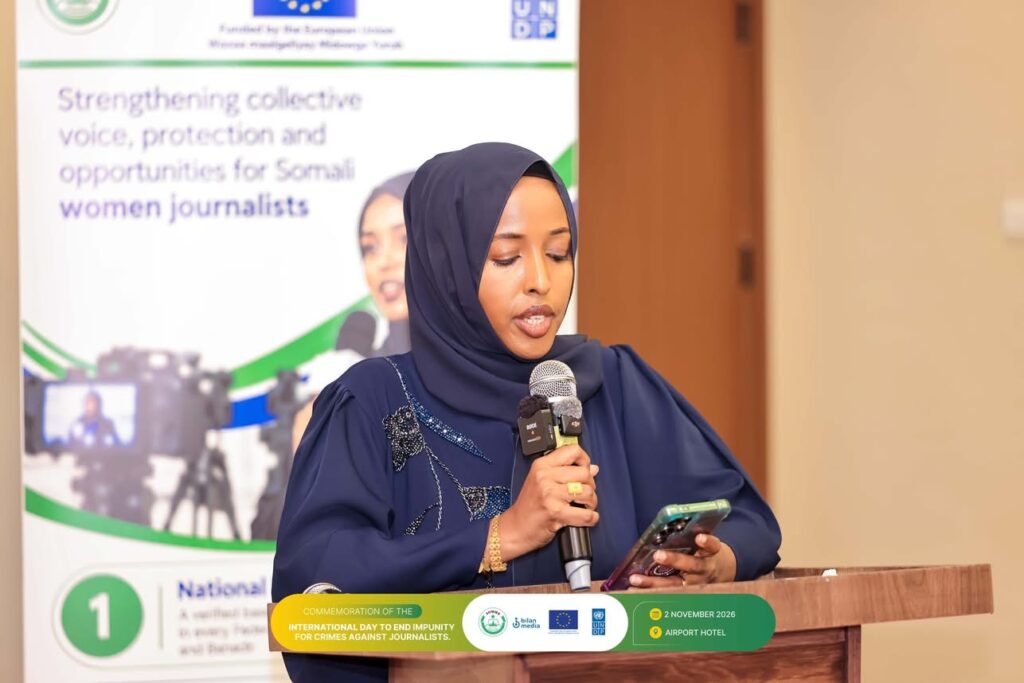
Speaking at the event, SOMWA Director Maryan Seylac condemned the continued arrests and deaths of Somali journalists, calling for credible investigations into cases involving journalists who have lost their lives while carrying out their professional duties.
She also called on the government to disclose the whereabouts of detained journalists within 24 hours and demanded an end to arbitrary arrests, confiscation of journalistic equipment, and the targeting of journalists for reporting the truth.
Seylac further urged the international community to support efforts to pursue justice through legal mechanisms and amplify the stories of journalists facing injustice.
“Journalism is not a crime, and accountability should not just be an option,” she said, while extending condolences to the families of journalists who lost their lives.
EU and UN Women call for stronger protection
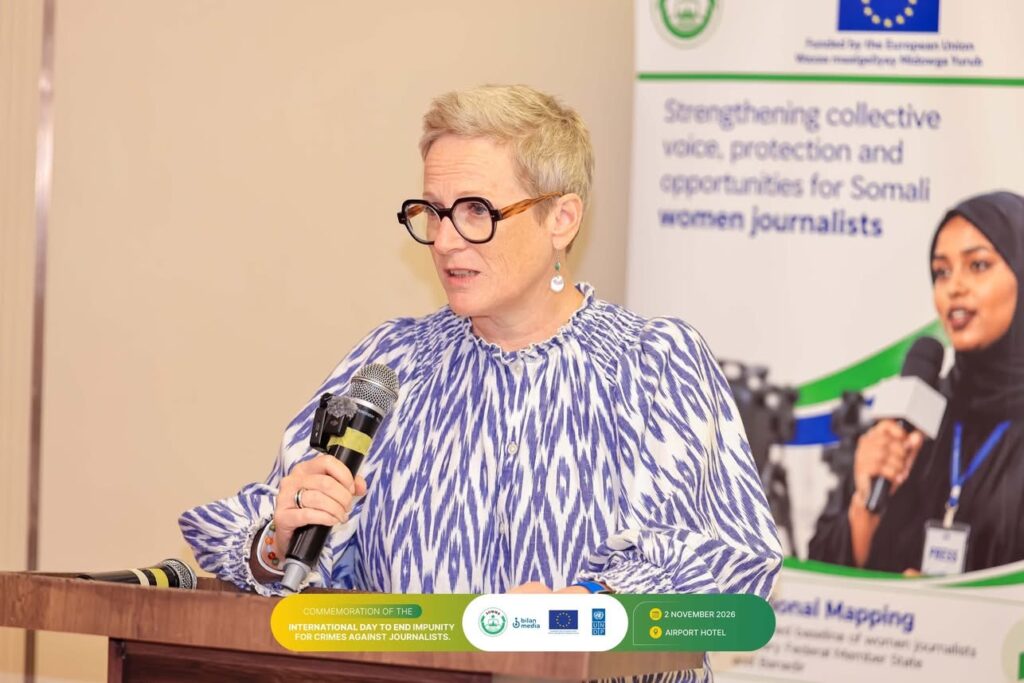
Deputy Head of the European Union Delegation to Somalia, Ms. Karin Gatt-Rutter, described the occasion as an important opportunity to recognise the risks journalists face, particularly women journalists, who are often targeted for their work.
She reaffirmed the EU’s commitment to engaging with media organisations and Somalia’s Ministry of Information to promote and protect journalists’ freedom and dignity.
Gatt-Rutter also highlighted the importance of responsible journalism and fact-checking, particularly amid the growing spread of misinformation on social media.
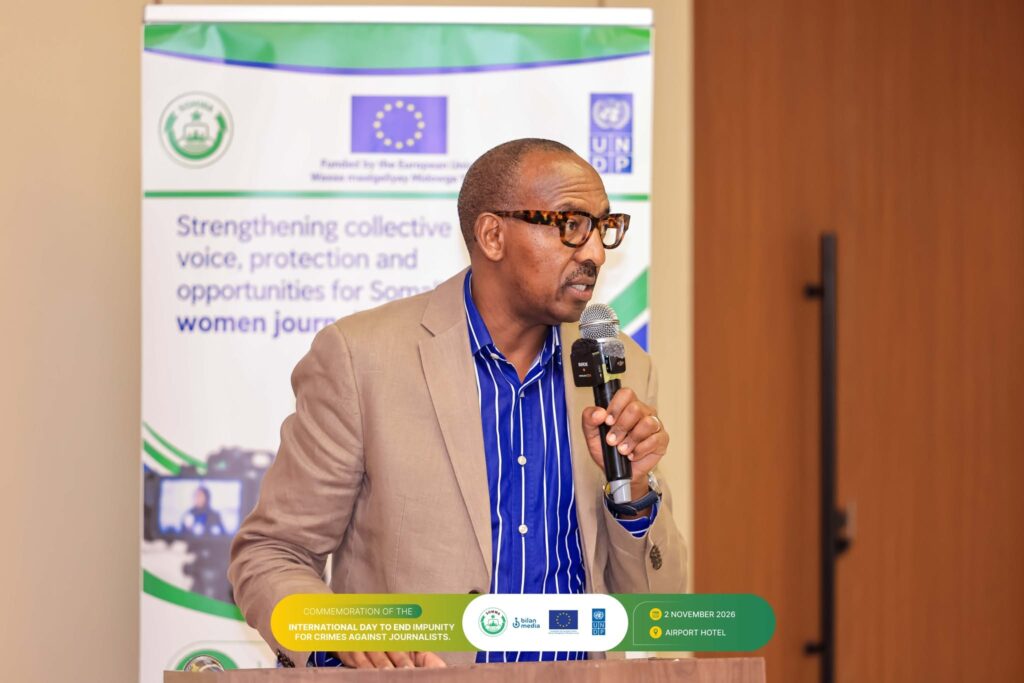
UNDP Somalia Transformational Governance Portfolio Manager Mr. Evariste Sibomana also called for stronger accountability, noting that journalists must be able to perform their duties without threats, intimidation or retaliation.
He stressed that women journalists experience violence both online and offline and urged all stakeholders to ensure they have equal opportunities to work freely and safely.
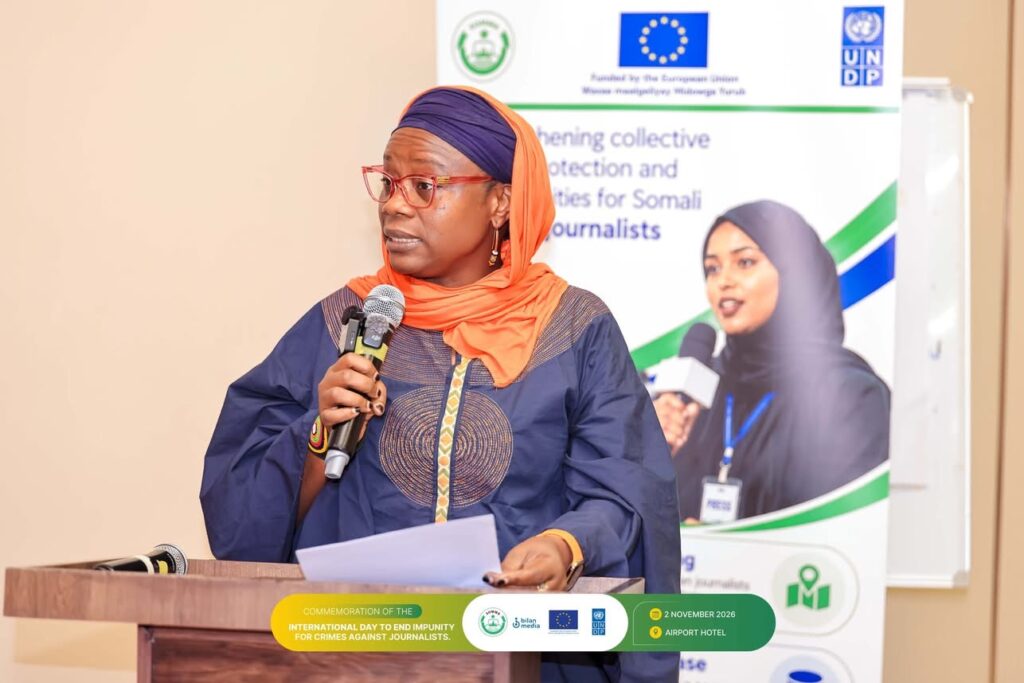
Meanwhile, Rukaya Mohamed, UN Women Somalia Country Programme Manager, praised SOMWA for its continued efforts to defend the rights of Somali women journalists.
She revealed that approximately 70 per cent of women journalists have experienced gender-based violence because of their profession.
Mohamed said women journalists face threats not only while reporting but also through gender-based harassment and intimidation, which undermine their ability to report freely and independently.
“Protection and accountability must go hand in hand,” she stressed, adding that women journalists should never have to choose between their safety and exercising their right to speak.
Journalists’ union warns against continued impunity
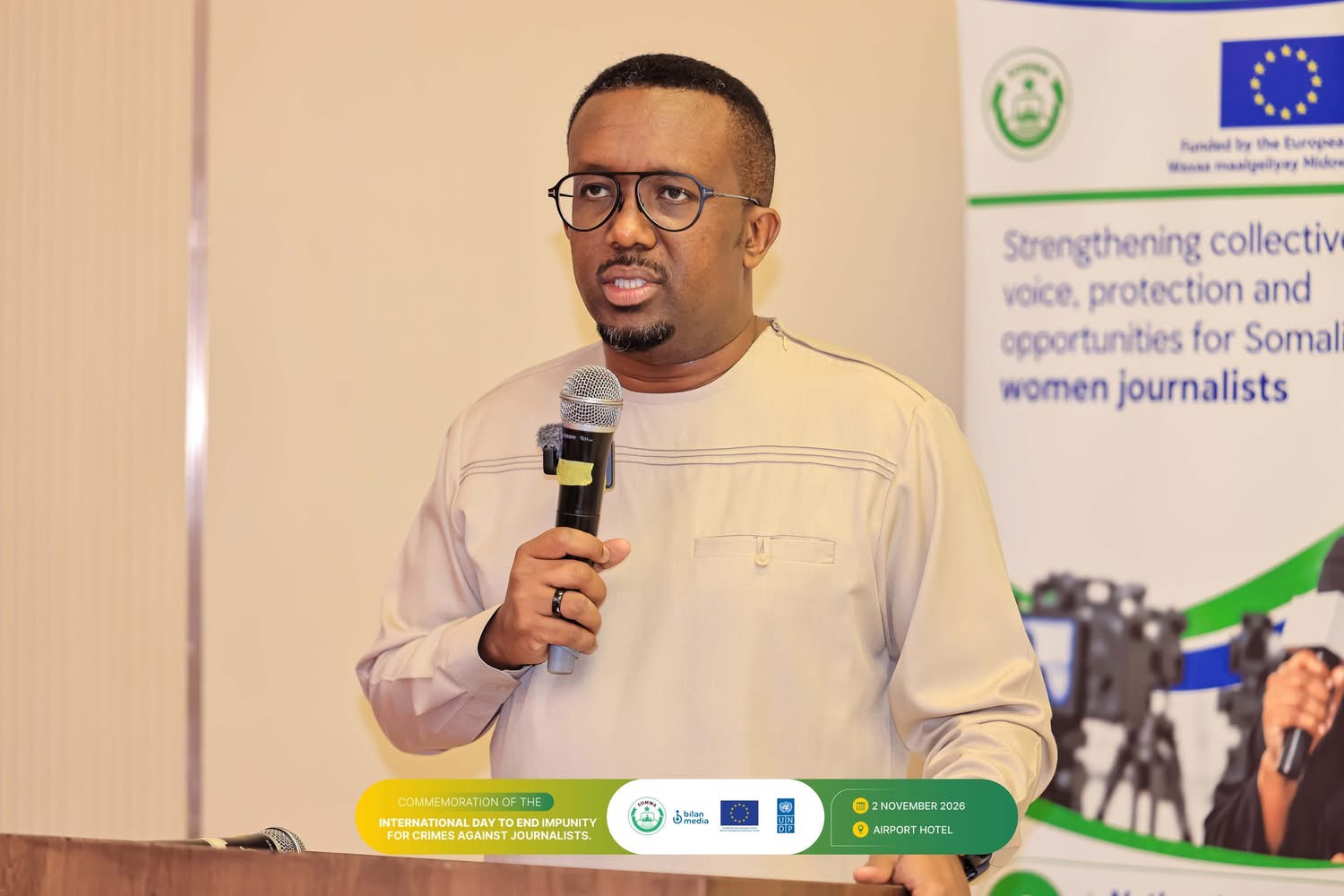
National Union of Somali Journalists (NUSOJ) Secretary-General Omar Faruk Osman described impunity as one of the biggest threats facing Somalia, warning that killings, arrests, and intimidation of journalists continue without accountability.
He emphasised solidarity among journalists, saying that an attack on one woman journalist affects the entire media community.
Osman also highlighted the insecurity women journalists experience both inside newsrooms and in the field, calling for collective action to confront abuse and intimidation.
Referring to SOMWA’s report, he said silence cannot be the solution to the challenges facing women journalists.
“Silence is not an option, and we must stand up together to confront this injustice,” he said.
Government pledges commitment to accountability
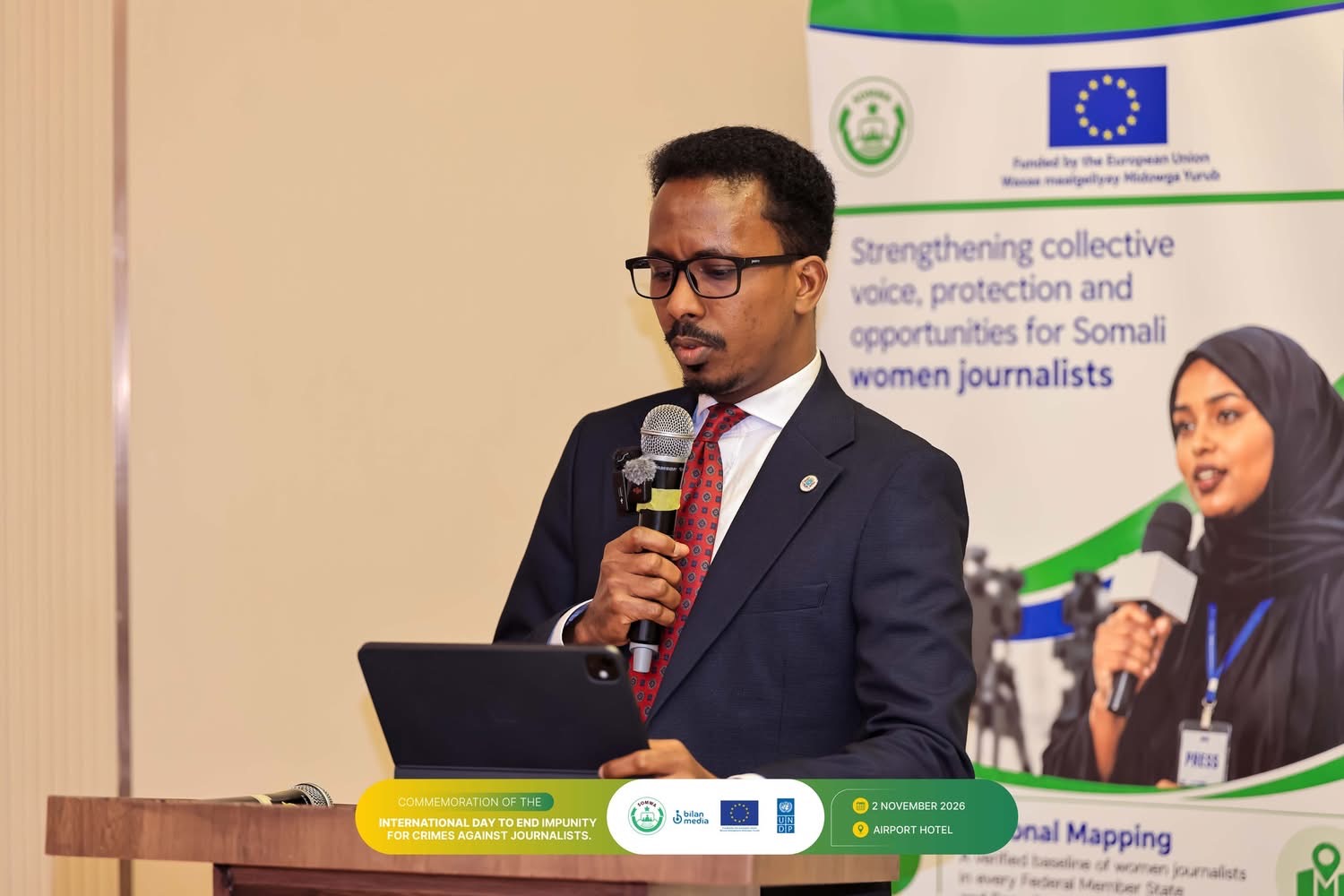
Representing the Federal Government of Somalia, Salah Hirei Kaire, Director General for Constitutional Affairs at the Ministry of Justice and Constitutional Affairs, recognised SOMWA’s work and the continued support of UNDP and the European Union.
He acknowledged the important role journalists play in exposing corruption, promoting transparency, and holding public officials accountable.
Kaire stressed that anyone responsible for the arrest or killing of a journalist must face justice, reaffirming the government’s commitment to strengthening the legal framework and ensuring that laws are properly implemented.
“No one is above the law,” he said, urging stakeholders to move beyond public statements and deliver meaningful action and tangible results.
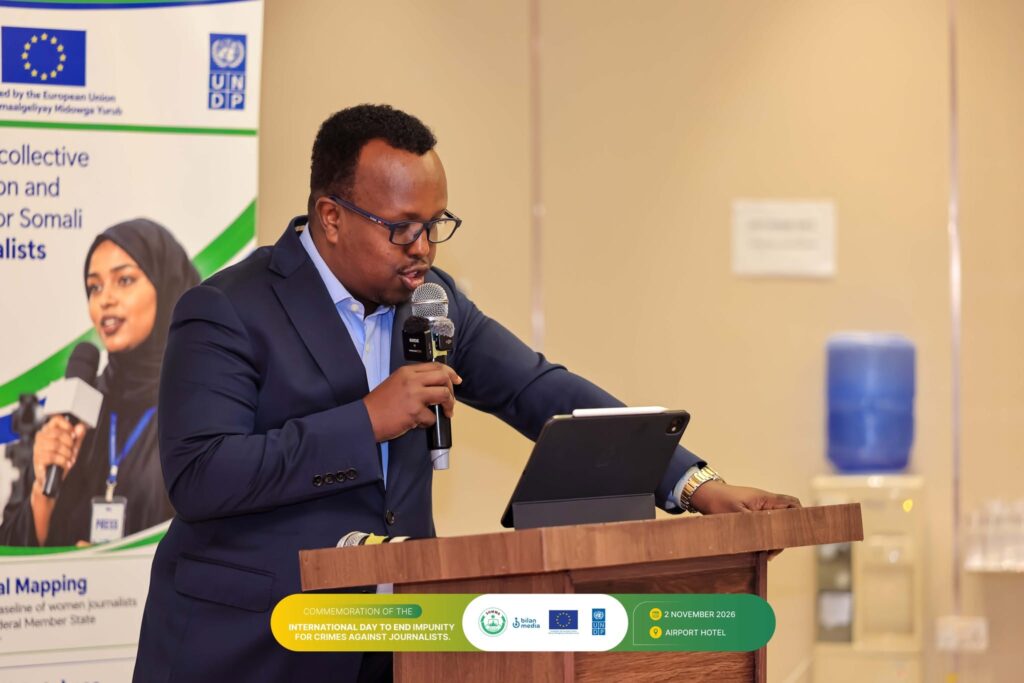
Commissioner of the Somali National Independent Human Rights Commission Farhan Mohamed Jimale said he had personally witnessed the hostile environment in which women journalists operate.
He stressed that documenting violations alone was insufficient and called for perpetrators to be held accountable while ensuring victims receive justice and appropriate protection.
Jimale welcomed SOMWA’s findings and recommendations, expressing the Commission’s readiness to work with the association and other stakeholders to address abuses against women journalists.
He concluded by reaffirming that the work and voices of Somali women journalists matter and that their right to work freely and safely must be protected.
SOMWA report highlights violations against women journalists
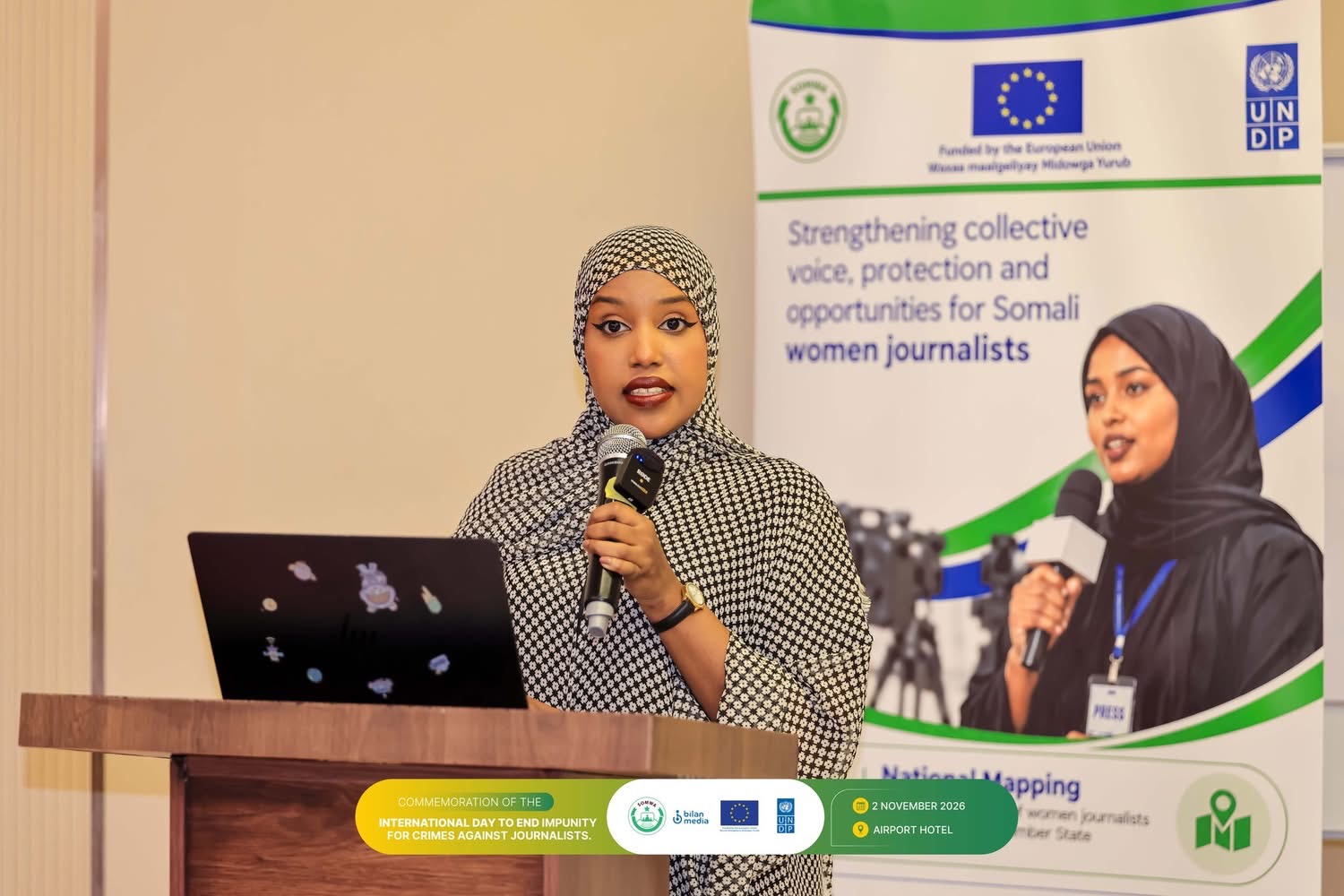
Presenting the initial findings of SOMWA’s baseline mapping of Somali women journalists, journalist Amira Farah Ahmad Rage shared figures highlighting the scale of challenges facing women in the media sector.
She said SOMWA had received 169 submissions through its mapping exercise and visited six cities, with a further 131 submissions needed to reach its target.
According to the findings, SOMWA documented 97 incidents involving the detention, assault, or online harassment of journalists between November 2025 and September 2026.
The mapping also identified persistent structural challenges, including low salaries, limited representation of women in media leadership positions, and fear that prevents many women journalists from speaking out.
In addition, SOMWA recorded 60 violations against women journalists in 2025, underscoring the continuing risks facing women working in Somalia’s media industry.
The event concluded with renewed calls for government institutions, media organisations, civil society, and international partners to strengthen protection mechanisms, investigate violations, and ensure that perpetrators are held accountable.
Participants stressed that protecting women journalists is essential not only for their safety and dignity but also for press freedom, democracy, and the public’s right to information.
Journalism is not a crime. Women journalists must be protected, and crimes committed against them must not go unpunished.